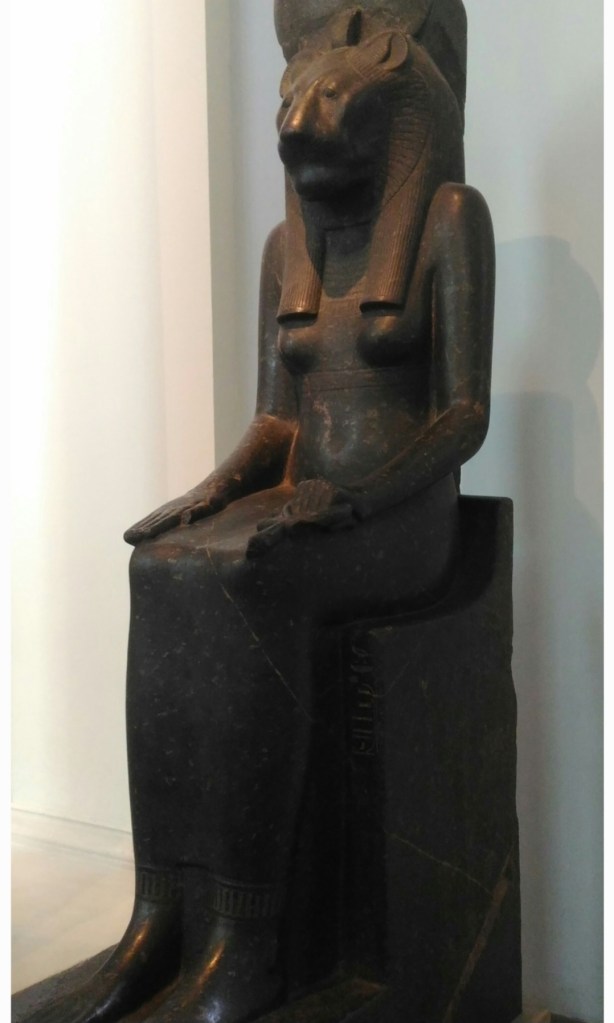
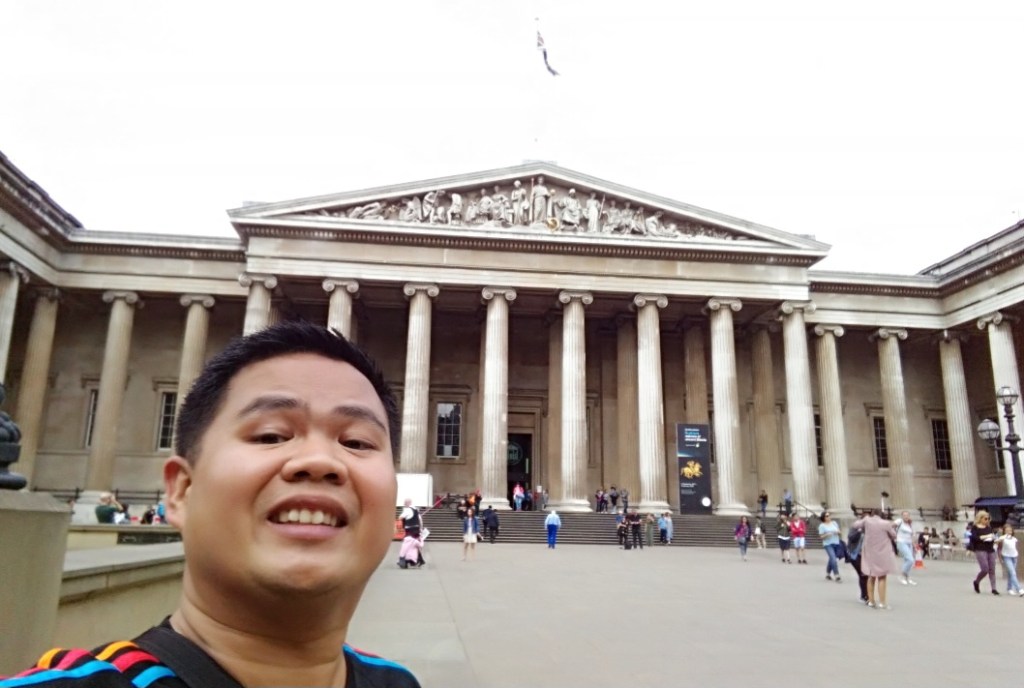
The British Museum, located in the heart of London, houses a vast and diverse collection of artifacts from around the world, each with its own unique story to tell. Among these treasures is a statue of Sekhmet, a formidable and revered goddess from ancient Egyptian mythology. This statue, carved from dark granite, stands as a testament to the enduring legacy of Sekhmet and her significance in the pantheon of Egyptian deities.
Sekhmet, often depicted as a lioness-headed woman or as a lioness, embodies the dual nature of ancient Egyptian gods – both destructive and protective. She is primarily known as the goddess of war, chaos, and healing. Sekhmet’s name itself means “the powerful one,” and her image conveys strength, ferocity, and authority. In Egyptian mythology, she was believed to be the daughter of the sun god Ra, and her role was to protect him and enforce his will.
The statue of Sekhmet at the British Museum is an awe-inspiring representation of this deity. Carved during the reign of Amenhotep III in the 14th century BCE, it stands at over seven feet tall and is an exquisite example of ancient Egyptian craftsmanship. The goddess is depicted in a standing position, holding an ankh (a symbol of life) in one hand and a scepter in the other. Her facial features are stern and regal, with a headdress adorned with a sun disk and uraeus (cobra). This image of Sekhmet captures her commanding presence and her dual role as a fierce protector and a healer.
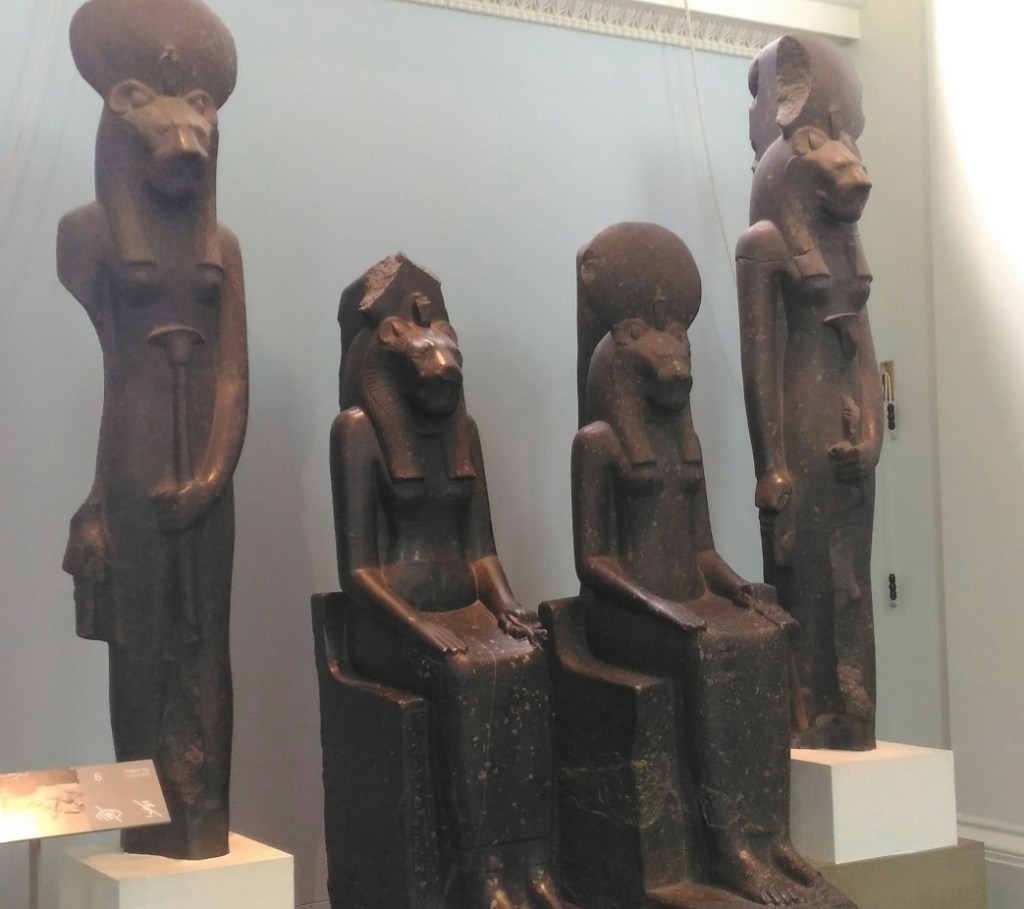
Sekhmet’s significance extended beyond the realm of warfare. She was also associated with healing and the ability to ward off plagues and diseases. Ancient Egyptians believed in her power to both inflict and cure illnesses, highlighting her dual nature as a deity who could bring destruction but also provide solace and healing when invoked with reverence.
The presence of Sekhmet’s statue at the British Museum serves as a powerful reminder of the rich tapestry of ancient Egyptian mythology and culture. It provides visitors with a glimpse into the complex belief systems and deities that shaped this ancient civilization. Moreover, it underscores the enduring fascination and reverence that Sekhmet continues to evoke even in the modern era.
The statue of Sekhmet in the British Museum stands as a remarkable testament to the enduring legacy of this powerful goddess in ancient Egyptian mythology. Her duality as a goddess of both destruction and healing reflects the complexities of human belief systems. Through this statue, visitors can connect with the mystique and reverence that Sekhmet commanded in the hearts and minds of the ancient Egyptians, allowing her story to continue to captivate and inspire people to this day.

 Doc John's Travel History